


While not an owner (yet), The Grand Tour presenter, farmer, and renowned automotive journalist Jeremy Clarkson once described the Lada Niva as “a personable, rugged little thing and you sort of want to give it a name.”
The Lada Niva is a gem in the realm of collectible cars – an enduring testament to simplicity, durability, and functionality. Its distinctive character, remarkable history, and mechanical reliability make it a fascinating object of interest for any classic car collector.
In the Niva, we see a car that, despite its simplicity, stands tall and proud in the face of modern automotive complexity, embodying a unique charm that continues to endear it to car enthusiasts worldwide. First manufactured in 1977, it holds the title of the longest-produced 4×4 SUV, with new Nivas being produced today with few changes to the original design. The Lada Niva is not just a car – it’s an experience, a story, and a piece of automotive history worth cherishing.
The Niva’s charm is not just rooted in its ruggedness or historical significance. It also lies in its idiosyncrasies. Its spare, no-frills interior, the surprisingly agreeable ride – due to its independent front suspension, advanced for its time – the hum of its rugged, simple engine, are all aspects that lend the Niva its quirky character. To own a Niva is to appreciate these quirks, understanding that they make up the unique essence of this pragmatically timeless vehicle.
The Birth of a Legend
The Lada brand, founded by Soviet carmaker AvtoVAZ, introduced the Lada Niva in 1977, under the official designation VAZ-2121. The Niva was envisioned as a rugged, reliable off-road vehicle to suit the demands of Russia’s diverse and challenging terrain and weather extremes. It quickly made its mark not only in its homeland but also globally, with its affordability and utilitarian functionality.
A Testament to Robustness
For any other vehicle, automotive designs undergo significant revisions every couple of years. In the case of the Lada Niva, its consistency is a distinctive, almost eccentric throwback. Its design has remained relatively unchanged over half a century, sticking to its boxy shape and compact dimensions. This adherence to its original design is a testament to the car’s durability and the philosophy behind its creation – a vehicle built to last and withstand, as well as a common Soviet design maxim ‘if it ain’t broke, don’t fix it, comrade’.

Making History
The Lada Niva was one of the first mass-market, off-road vehicles to feature a unibody structure and a coil-sprung independent front suspension, both hallmarks of many modern SUVs. The Soviet-born 4×4 has also seen success in motorsports, participating in grueling expeditions like the Dakar Rally and further cementing its status as one of the most durable off-roaders.
In a world where cars are increasingly packed with complex technologies, the Lada Niva persistently offers an alternative – a vehicle that prizes function over form, durability over delicacy, and simplicity over sophistication. For classic car enthusiasts, the Niva provides a unique blend of history, mechanical simplicity, and an irresistibly rugged charm that is rare in today’s automotive landscape.
Under the Hood
Mechanically speaking, the Niva’s unique full-time, 4×4 system is powered by a simple, rugged 4-cylinder gasoline engine. The traditional 1.7-liter has proven to provide reliability which it lacks in power, imparting the Niva with enough grunt to traverse rugged landscapes. Even running on 2 cylinders, this ruggedness prompted the Serbian expression ‘The Lada Niva will always get you home’. This design focus on dependability is also seen in the solution to poor battery technology and bitter Siberian winters- up into the mid-1990s, Lada Nivas could be manually cranky started on a cold morning. This mechanical simplicity enhances the vehicle’s appeal making it easy to repair. That was a boon to both Soviet citizens back in the day and for classic car collectors and Niva enthusiasts today.
The Lada Story: Establishing Russia’s Auto Identity
The story of Lada is intrinsically linked to the history of the Russian automotive industry. Its establishment marked a pivotal moment in the industry, changing the way Russians viewed car ownership. Through its highs and lows, Lada has consistently shaped and driven the development of Russia’s automotive industry. As we look toward the future, the Lada brand remains a testament to Russian resilience, ingenuity, and adaptability in the ever-evolving world of automotive manufacturing.
The Birth of Lada
Lada was born under the umbrella of the Soviet automaker, AvtoVAZ, in 1970. AvtoVAZ itself was a product of a historic collaboration between the Soviet Union and Italy’s Fiat. The deal struck between the two nations aimed to modernize the Soviet Union’s automotive industry and equip it with the means to produce a reliable, affordable car for the masses.
The first fruit of this venture was the VAZ-2101, or as it would be more commonly known internationally, just the Lada. This first vehicle was a license-built version of the Fiat 124, re-engineered to better suit the harsh climate and tough road conditions of the vast Soviet Union.
Driving the Russian Automotive Industry
Lada’s impact on the Russian automotive industry is still undeniable today. At a time when car ownership was a luxury for many in the Soviet Union, Lada made it a reality, producing vehicles that were cheap, dependable, easy to maintain, and capable of withstanding the country’s harsh weather conditions.
Lada not only dominated the domestic market but also made a significant impact abroad. Exporting to countries in both the Eastern and Western blocs throughout the latter third of the 20th century, brought the Russian auto industry to the global stage. The brand quickly became synonymous with Russia’s automotive industry, and models like the Lada Riva and Lada Niva became recognizable worldwide.
Weathering Change
Throughout numerous historical, political, and economic challenges, Lada and its vehicles seemed to have weathered change better than the country they were manufactured in. Though the company faced numerous challenges, including the collapse of the Soviet Union and the most recent Russo-Ukrainian War. The brand, however, has shown resilience, continuing to produce cars and even modernizing its lineup to keep pace with changing market demands or even simplifying manufacturing and parts further to survive economic upheaval and economic sanctions.
Lada Niva in Motorsports
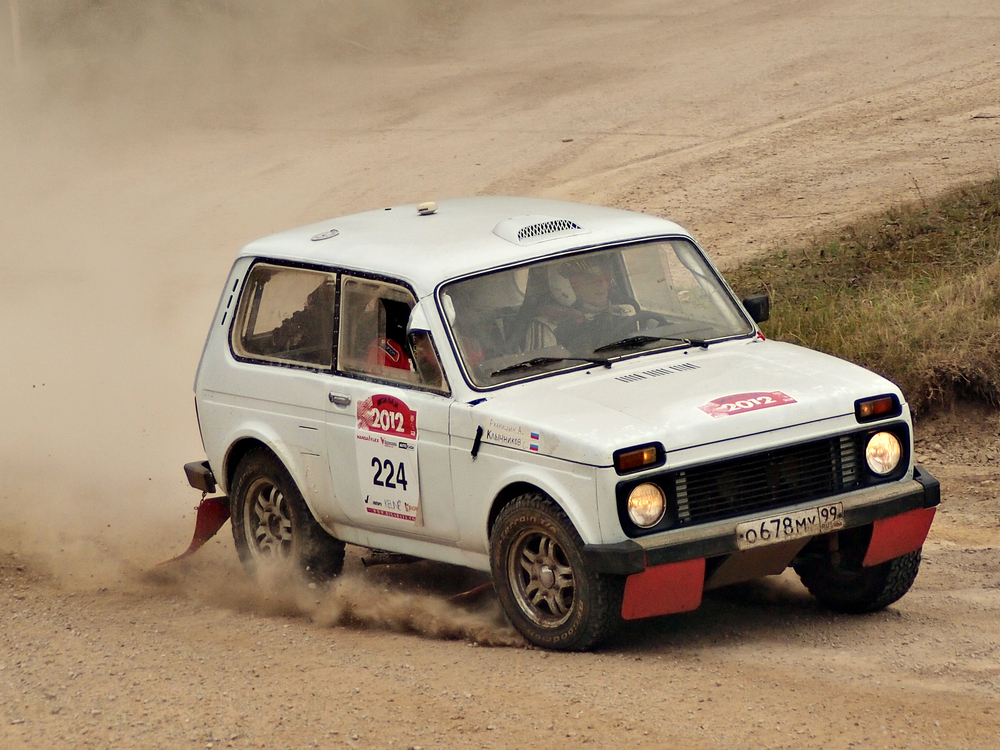
The Lada Niva’s rugged simplicity and adaptability have made it a compelling choice for various motorsport events, particularly in the world of rallying. One of the most prominent highlights of the Lada Niva’s motorsport history was its participation in the Dakar Rally, one of the toughest and most demanding motorsport events on the planet.
The 1995 Dakar Rally saw the participation of a pair of specially prepared Nivas. Despite facing stiff competition from more powerful and technologically advanced vehicles, these Lada Nivas, with their enhanced durability and ease of repair, displayed commendable performance. The determination and resilience embodied by these vehicles in one of the world’s most challenging races solidified the Niva’s status as a rugged off-roader in the motorsport world.
Adventurous Expeditions
The Lada Niva has also been a part of some extraordinary expeditions that truly tested its capabilities. One such instance was the remarkable Trans-Antarctica expedition in the 1980s. A team of six scientists and explorers used modified Niva vehicles to traverse the harsh, icy landscapes of Antarctica. Despite the extreme conditions, the Nivas successfully completed the journey, a testament to their durability and all-terrain prowess.
In a similar vein, French adventurers Thierry Bados and Raymond H. took two Lada Nivas on an epic journey from Paris to New York… the long way, in 1989-90. They traveled east from Paris, covering over 42,000 km across Europe, Asia, the Bering Strait (on a cargo plane), and North America. The journey was a testament to the Niva’s robustness and adaptability.
Over the years, the Lada Niva has developed a dedicated fan base, with owners often sharing stories of their adventures and experiences. One example is Ben Coombs, a British adventurer who embarked on a seven-month journey from the northernmost pub in the world, in Norway, to the southernmost, in Chile, in his trusty 2001 Lada Niva. His 32,000-km journey across 21 countries stands as a testament to the reliability and durability of the Niva.
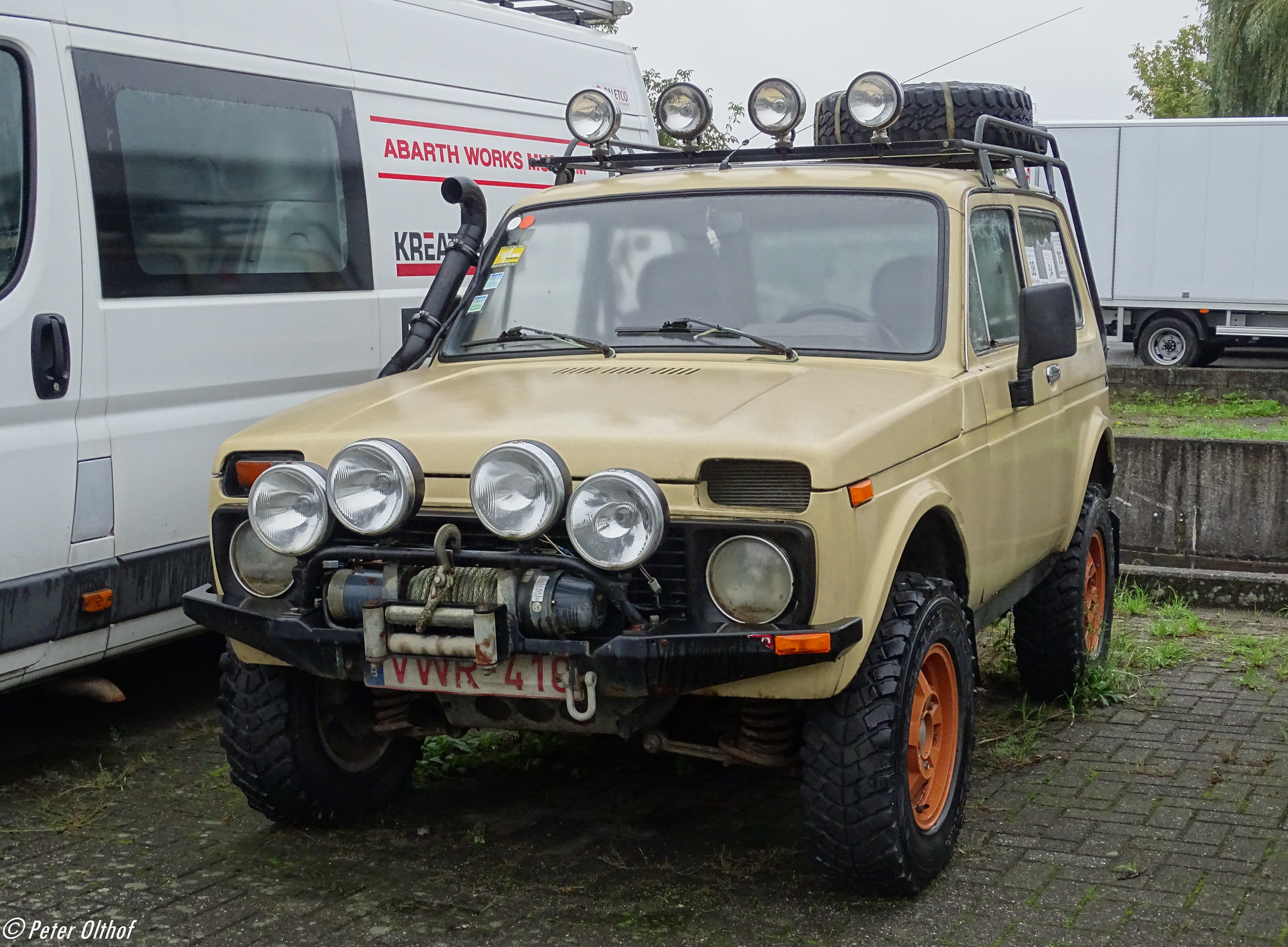
Image source: Peter Olthof, under CC BY-ND 2.0 license.
Manufacturing the Legend
Since its debut in 1977, the Niva has been revered for its unique combination of rugged durability and simple, efficient engineering. But behind every great car is the fascinating story of its production. Let’s take a look at the manufacturing platform of this iconic Russian off-roader.
Through the decades, the production methods have evolved and improved, but the core principles that define the Niva — simplicity, durability, and affordability — have remained unchanged. From the sprawling production facility in Tolyatti to the meticulously Niva-focused workers on the assembly line, every piece of the puzzle contributes to creating this unique vehicle that has captivated drivers around the world for more than four decades.
The Manufacturing Process and Facilities
The VAZ-2121, as it’s known on the production line, is primarily manufactured in the AvtoVAZ production plant in Tolyatti, Russia. The town itself was established for automotive manufacturing and named after Italian Communist Party leader Palmiro Togliatti. The colossal manufacturing facility is one of the largest in the world, boasting a floor area of nearly 65 million square feet and employing thousands of skilled workers.
The production line is a harmonious blend of machinery and manpower. Robots and automated machinery handle tasks that require precision or are physically demanding, such as welding and heavy lifting. Humans, however, play an equally crucial role in the assembly process.
The manufacturing process of the Lada Niva has seen some changes over the decades. When the Niva first entered production, much of the assembly work was done manually, which, while effective, was labor-intensive and time-consuming. The introduction of automation and robotics in the manufacturing process has not only increased efficiency but also improved the precision and consistency of the assembly process. Despite these advancements, the production of the Niva still relies heavily on the skills and expertise of its human workforce.
Manufacturing Challenges
Like many car manufacturers, Lada has faced its fair share of manufacturing challenges. In the early years, these included managing quality control and overcoming resource and parts shortages. Then the company had to navigate through economic instability following the collapse of the Soviet Union.
However, through strategic partnerships and continuous improvement of their production methods, Lada has managed to overcome these hurdles. The partnership with Renault-Nissan in 2008 was a significant milestone, providing access to new technologies and modern production techniques.
The Engine that Drives the Niva
In its mechanical essence, the Niva embodies a philosophy of simplicity and durability. It’s a vehicle that wears its heart on its sleeve, offering a straightforward and capable mechanical configuration that has endured the test of time.
Under the hood of the later classic Lada Niva, you’ll find a 1.7-liter, fuel-injected inline four-cylinder engine while the first generation, older Nivas have carbureted 1.6-liter engines. The newer motor maintains the simplicity and reliability of the original while producing a humble 79 horsepower and 98 lb.ft. of torque. The original carbureted 1.6l motor put up 75 hp and 87 lb.ft. of torque.
Over the years, the Niva’s engine has seen several improvements and modifications. However, the heart of the Niva has remained remarkably consistent, maintaining its reputation for incredibly easy maintenance.
Gear Up: Transmission and 4×4 System
One of the Russian off-roader’s defining features is its 4×4 system. The Niva is equipped with a five-speed manual transmission coupled with a transfer case, allowing for full-time four-wheel drive, a locking central differential, and a low-gear option in the rear differential. This transfer case, along with the high ground clearance, gives the Niva its famed off-road capabilities.
The car’s transmission, much like anything else on the Niva, has remained largely unchanged over the years with the exception of moving to a 5-speed gear box with the 1.7l motor. The ability to manually select drive modes allows drivers to adapt to different terrains, a feature that drivers find particularly valuable in off-road conditions.
The Evolution of Niva’s Mechanical Components
When it first came to the stage back in 1977, the Lada Niva was truly revolutionary. One of the first mass-produced off-road vehicles to feature a unibody structure and independent front suspension, giving it a more comfortable ride compared to other off-roaders of its time, the Niva was the wave of the future.
As the years passed, the Niva saw some modifications to its mechanical components, including the introduction of electronic fuel injection in the late 1990s during the transition to the larger 1.7l motor, providing better fuel efficiency and emissions control.
Despite these advancements, the heart and body of the Niva have remained consistent. Its distinct form and mechanical simplicity have been its most enduring traits, allowing it to navigate terrains that other, much better-equipped, vehicles would find challenging.
Unique Traits and Common Mechanical Issues
What makes the Lada Niva unique in its mechanical configuration is its straightforward, no-nonsense design. The engine, manual transmission, and adaptable 4×4 system are tailored for practicality and durability above all else.
The Niva, however, is certainly not without its quirks. Common mechanical issues with older models often involve the electrical system, often more because of the age of the vehicles but also because of the simplicity of the design. The full-time four-wheel drive does wear out the front hubs faster than similar vehicles. As a Russian vehicle exposed to harsh conditions, rust is a frequent, if not ubiquitous issue with this Lada model, especially in areas where road salt is used.
Despite these issues, the Niva’s reputation for reliability holds strong. With proper maintenance and care, a Lada Niva can go on almost indefinitely, as was the intention behind its solid, simple engineering and design.
A Humble Hero among Giants
In a world where cars are increasingly complex and digitized, the Lada Niva is a breath of fresh air. It’s a tangible throwback to a time when driving was a more mechanical, hands-on experience.
In the off-road vehicle category, names like the Toyota Land Cruiser and Land Rover series often come to mind. These vehicles are renowned for their luxurious interiors, advanced technologies, and, of course, formidable off-road capabilities. But the Niva diverges, perhaps intentionally from this norm and its uniqueness lies in its simplicity.
Unlike its more sophisticated counterparts, the Niva offers minimal to no frills. No plush leather seats, no fancy screens, no state-of-the-art driver assist systems. Instead, rugged driving fans get a functional interior, a robust body, and easy-to-mend mechanicals built to specifically for tough terrains and harsh conditions.
The Niva’s 4×4 system is manually controlled and might feel outdated compared to the electronic systems found in other modern off-road heroes. This is where the charm of the Niva lies – it’s a hands-on, mechanically simple vehicle that demands and rewards driver involvement.
The Enduring Appeal of the Lada Niva
The enduring appeal of the Lada Niva in automotive culture is nothing short of fascinating. It’s not about high-speed thrills, luxurious interiors, or avant-garde technology for fans of the Niva. It’s the raw, unfiltered connection between driver, machine, and the road (or lack thereof) that makes the Niva so special.
The straightforwardness of it means there’s less to go wrong, and even when something does, repairs are generally simple and cheap – a priceless bonus for those venturing into remote areas. Another bonus is its compact size, compared to the larger footprint of heavier vehicles like the Land Rover or Land Cruiser, making this old-timer a nimble companion in tight off-road trails.
And then there are the Niva’s distinctive aesthetics. With its simple, clean design and unique headlights, it has a retro charm that stands out in today’s world of sleek, aerodynamically optimized cars, and one that is increasingly sought after among nostalgic car collectors.
In terms of legacy, the Lada Niva holds a strong position as one of the pioneering compact SUVs. The Niva paved the way for the concept of a vehicle that combines daily usability with competent off-road capability – a concept that underpins the hugely popular SUV segment today.
The Niva also holds a unique status as a cultural icon, its simplicity and durability making it a common sight in the most remote parts of the world. It’s as much at home in the bustling streets of any Eastern European capital as it is in the arid expanses of the Sahara or the rugged trails of Colorado.
Mint Car: Your Gateway to Classic Lada Nivas
Importing a classic Lada Niva into the United States can be a rewarding endeavor, particularly for lovers of vintage off-roaders. While the process can seem complex, a clear understanding of the requirements and regulations, along with a healthy dose of patience, can make it a smooth journey. Enter Mint Car, a unique company that has carved out a unique niche for itself in the world of classic collectible cars – finding, prepping, and shipping collectible vintage Central and Eastern European cars to the U.S..
Mint Car has gained a reputation for specializing in procuring, restoring, modifying, and exporting vintage Lada Nivas and other oddball cars from Europe and into the welcoming hands of collectors and off-road enthusiasts in the United States.
Based in Eastern Europe, the heartland of Lada Nivas, Mint Car has unrivaled access to these charming off-roaders and we the capacity to export them to the United States too. Our American-Serbian team scours local markets and private sellers, carefully selecting Nivas that meet our high standards of authenticity and potential for restoration.
How it Works
Once a Niva is procured, our team really gets to shine and get the vehicle into Mint Car shape. Although we are also reluctantly willing to ship the vehicle to collectors in the U.S. as-is. Mint Car’s local network of experienced mechanics and restoration artists breathe new life into these deserving classics. If requested, our crew meticulously restores each vehicle, ensuring that every nut and bolt, every panel, and every mechanical component is in top-notch condition and comes from original Lada Niva parts manufacturers.
But we don’t just stop at restoring. Mint Car understands that some collectors and enthusiasts might want modern comforts or off-road capabilities beyond what the original classic Nivas offered. To cater to these demands, we offer thoughtful modifications, from installing modern seats, rust protection using polymer and powder coatings, LED light bars, external accessories such as roof racks, ladders, bull bars, enhanced skid plates and modest coil suspension lifts to enhance off-road capabilities.
One of the hallmarks of the Niva are its narrow factory tube tires which increase the grip by concentrating the low vehicle weight to a small contact patch. Tubeless tires have advantages for off-roading with added puncture protection and airing down, but tube tires are rare in the U.S. Mint Car can equip your Niva with either tube or tubeless tires in OEM dimensions or mount oversized tires.
If you’re in the United States and have a soft spot for classic Lada Nivas, Mint Car could very well make your dream come true. Before you pick up the phone to call us, let’s go over some of the basics of importing a Niva stateside.
Importing a Classic Lada Niva into the United States
We’re not going to lie. Unlike the Lada Niva, importing classic cars from Europe to the United States is neither simple nor straightforward, despite the rugged terrain of laws, regulations, and mountain of paperwork. Think of it as bureaucratic off-roading.
And before you ask – yes, Mint Car is equipped and ready to handle most of the export and import process for customers residing in the United States. Aside from procuring and readying classic vehicles for shipping, Mint Car also partners with registered, experienced shipping companies that specialize in shipping vehicles in Europe or from Europe to the United States.
Before we get into the standard procedures of it all, let’s address the elephant in the room. The misconceptions regarding the “legality” of importing vehicles manufactured in Russia into the United States.
Is it legal to import a classic Lada Niva into the United States?
If you are looking to purchase or import a new Lada Niva or a used Lada Niva that does not qualify as a classic or vintage vehicle, then the simple answer is – no, new or newer model Lada Nivas is not legal to register and drive in the United States, mostly due to U.S. emissions and safety regulations.
If you are looking to purchase and/or import a used Lada Niva that is at least 25 years old, then the answer is – yes, it is legal to import a used 25-year-old or older Lada Niva into the United States, provided that the paperwork, mechanical state of the vehicle, and country you are importing from all meet current U.S. federal requirements and you may register the vehicle, provided the vehicle and paperwork meet the requirements of the particular state you wish to register the vehicle in.
The 25-Year Rule and State-specific Regulations
First, let’s talk about why the Lada Niva you want to import must be at least 25 years old, from the date of manufacturing. According to the regulations established by the U.S. Customs and Border Protection (CBP) and the Environmental Protection Agency (EPA), vehicles that are 25 years old or more are considered classics or antiques. This exempts them from certain Federal Motor Vehicle Safety Standards (FMVSS) and EPA emissions requirements, which simplifies the import process significantly.
However, it’s crucial to note that specific regulations can vary from state to state. It’s best to check with your state’s Department of Motor Vehicles (DMV) for the exact regulations and requirements before you start the import process.
Essential Paperwork
Importing a vehicle involves several key documents required to identify, transport, and get the vehicle through US Customs.
These typically include:
- A Bill of Sale: This document confirms the purchase of the vehicle and includes details such as the purchase price and the identities of the buyer and seller. In Europe, a bill of sale like in the United States does not exist, and a purchase agreement or contract is usually an acceptable replacement.
- Foreign Registration: This verifies that the vehicle was registered in its country of origin. In most European countries, the registration must be canceled before the car can be exported from the European country in question and imported into the United States.
- Shipping Document (Bill of Lading): Provided by the shipping company, this document verifies the details of the shipment.
- Form HS-7: This form, provided by the U.S. Department of Transportation (DOT), declares that the vehicle complies with or is exempt from, as is the case with classic or antique cars, DOT standards.
- Form EPA 3520-1: This EPA form declares that the vehicle complies with or is exempt from EPA regulations.
The Delivery Timeline and Points of Entry
The timeline for importing a vehicle can vary based on several factors, such as the shipping schedule, the speed of paperwork processing, and any potential inspections upon arrival. However, a ballpark figure would be between six to ten weeks.
The United States has numerous ports of entry that handle vehicle imports. Some popular ports for importing vehicles on the East Coast include those in New York, Baltimore, and Jacksonville. On the West Coast, popular entry points are Los Angeles and San Francisco.
What About Finding a Lada Niva to Buy in Europe?
That’s exactly how Mint Car came to be. If the bureaucratic complexities of importing a classic vehicle into the U.S. weren’t enough, looking for a car to buy from thousands of miles away is costly and difficult, if not impossible. You can always hop online and scour used car websites across Europe to find a vehicle you like, although you will probably have to take a few days off and get on a plane to look at the car in person and wrap up the paperwork and payment in Europe. Or you could just hire Mint Car to do all of that for you.
Mint Car works with you from the beginning to help select and source the Lada Niva you want. We will thoroughly evaluate the vehicle and provide you with a detailed list of mechanical and bodywork that is either required, recommended or optional.
What truly sets our small company apart, though, is our commitment to simplifying the export process, a consequence directly derived from Mint Car founder Erik D. Griffith’s passion for Nivas. We are well-versed in navigating the intricacies of exporting cars from Europe to the United States, armed with the knowledge of laws, regulations, and bureaucracies of both the Old and New World. Our team and partners handle the paperwork, shipping logistics, and import processes, ensuring that your newly acquired classic vehicle arrives at your doorstep with minimal hassle.